Scalloped Tile in 2026: What to Know Before Using It in a Bathroom, Shower or Backsplash
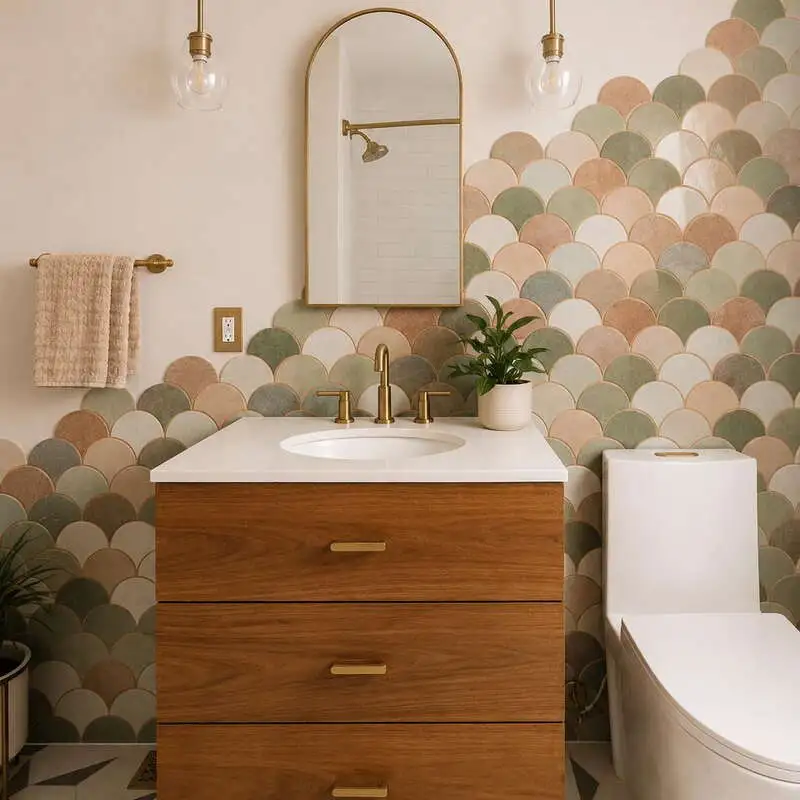
Scalloped tile is becoming one of the standout tile trends of 2026. Also called fish-scale tile, fan tile or mermaid tile, this curved mosaic creates an overlapping pattern that adds movement and personality to bathrooms, showers and kitchen backsplashes.
The trend is backed by real search activity. Houzz reported that U.S. searches for “scalloped tile” more than tripled in early 2026 compared with the same period in 2025. Pinterest’s 2026 design trends also show growing interest in fan shapes, arches, decorative geometry and richer colors.
But just because scalloped tile is popular does not mean every version works in every room. Material, grout, installation and maintenance all matter.
What Is Scalloped Tile?
Scalloped tile is made from repeating curved pieces that resemble overlapping scales or fans.
You may see similar products described as:
- Scalloped tile
- Fish-scale tile
- Fan tile
- Mermaid tile
Manufacturers sometimes use different names for nearly identical shapes, so homeowners should search more than one term when comparing products.
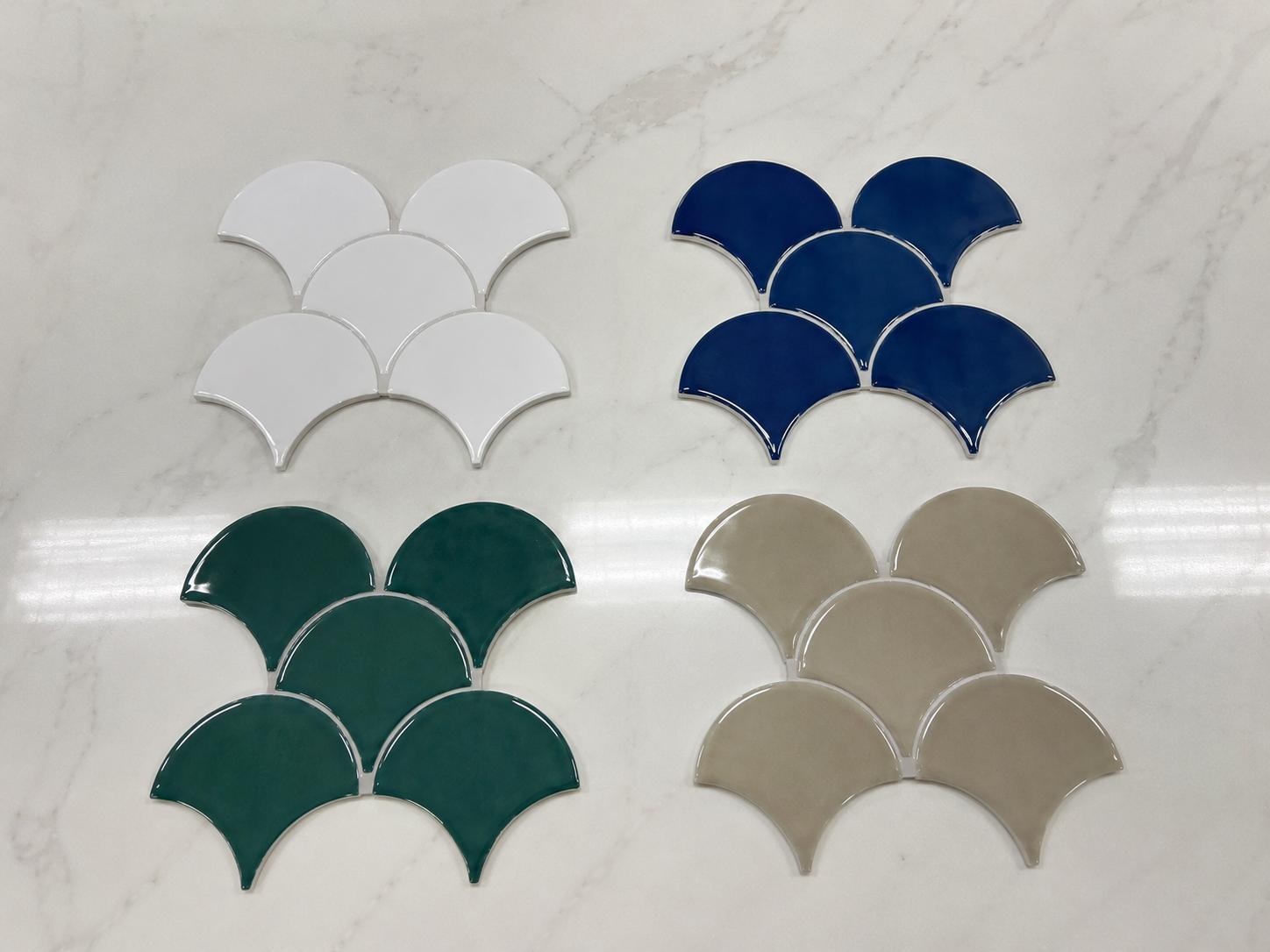
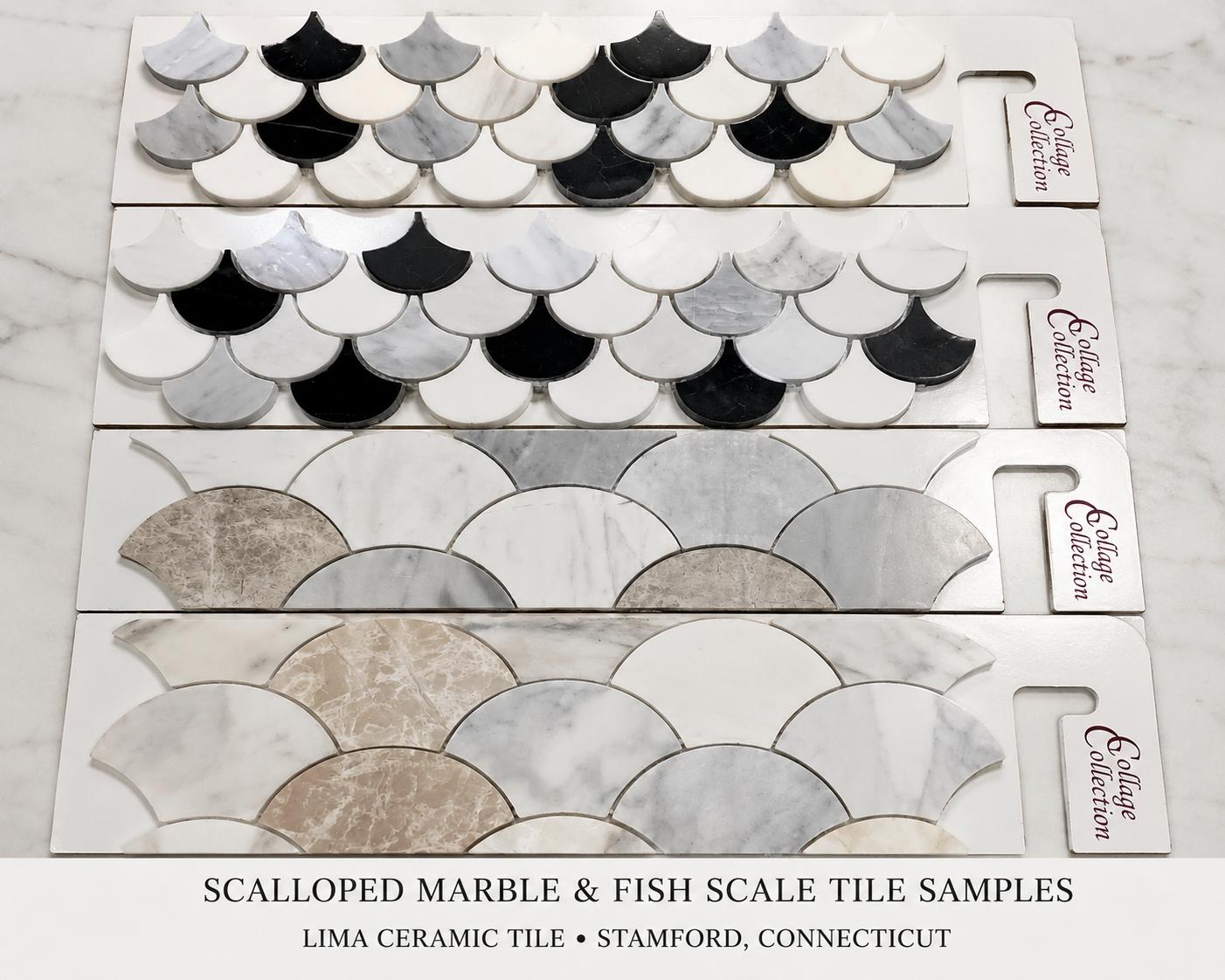
Lima Ceramic Tile carries scalloped and fish-scale options from manufacturers including Anatolia Tile, Florida Tile, Daltile and Carrara Italia, with choices in porcelain and natural marble.
Why Is Scalloped Tile Trending?
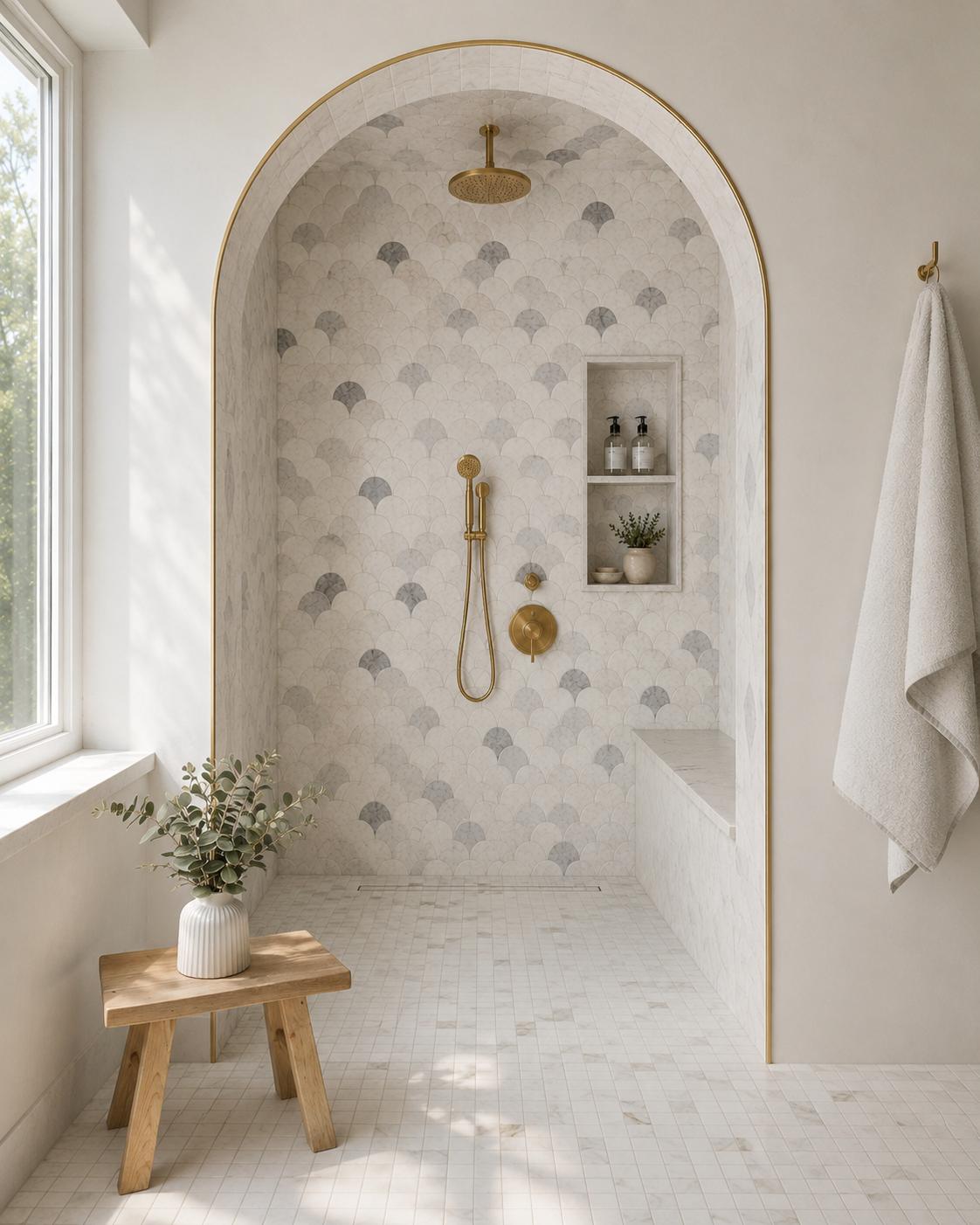
After years dominated by straight subway tile and simple rectangular shapes, homeowners are bringing more curves and decorative details into kitchens and bathrooms.
Scalloped tile offers that interest without requiring an extremely complicated pattern. The shape itself becomes the design.
It can also create very different looks depending on the material and color:
- White and cream can feel clean and subtle.
- Blue can create a coastal or spa-like look.
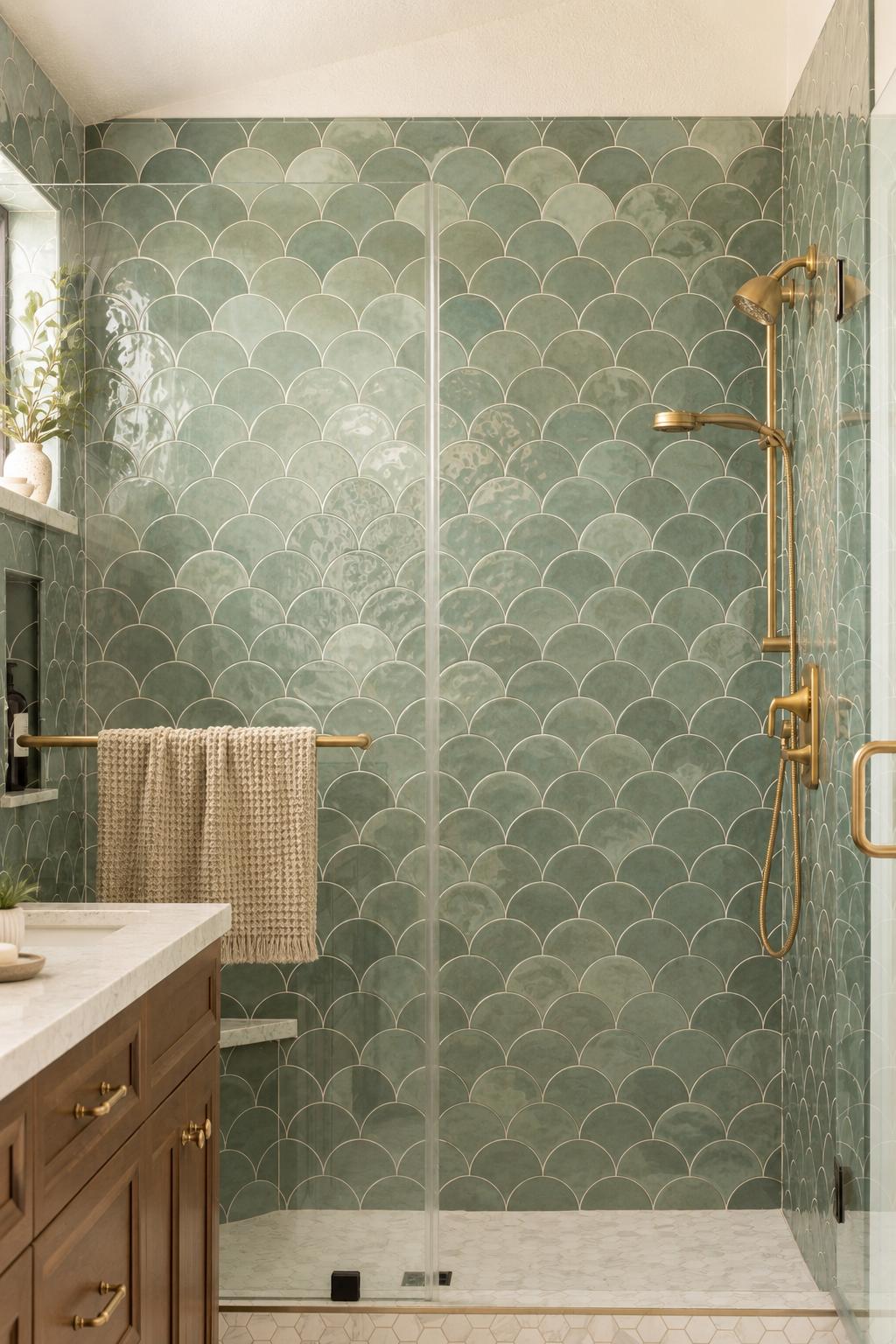
- Green and olive add warmth and personality.
- Marble creates a more natural, upscale appearance.
- Deeper colors can lean toward Art Deco-inspired interiors.
Where Does Scalloped Tile Work Best?
Bathroom vanity walls
A vanity backsplash or feature wall is one of the easiest places to use scalloped tile.
Because the pattern is concentrated in one area, it can add personality without making the entire bathroom feel busy. It pairs especially well with simple vanities, quartz countertops and quieter floor tile.
Shower walls
Many porcelain scalloped mosaics can work well on shower walls when the specific product is approved for that application.
Always check the manufacturer’s specifications before purchasing. Not every tile is approved for every wet-area application.
Kitchen backsplashes
Fish-scale tile is also a strong backsplash option. The curved shape can make a kitchen more distinctive than traditional subway tile while still being easy to coordinate with cabinetry and countertops.
Glazed porcelain is often attractive here because it generally requires less maintenance than porous natural stone.
Powder rooms
A powder room is a good place to experiment with a stronger color or pattern because it is a smaller, separate space.
What Grout Color Works Best?
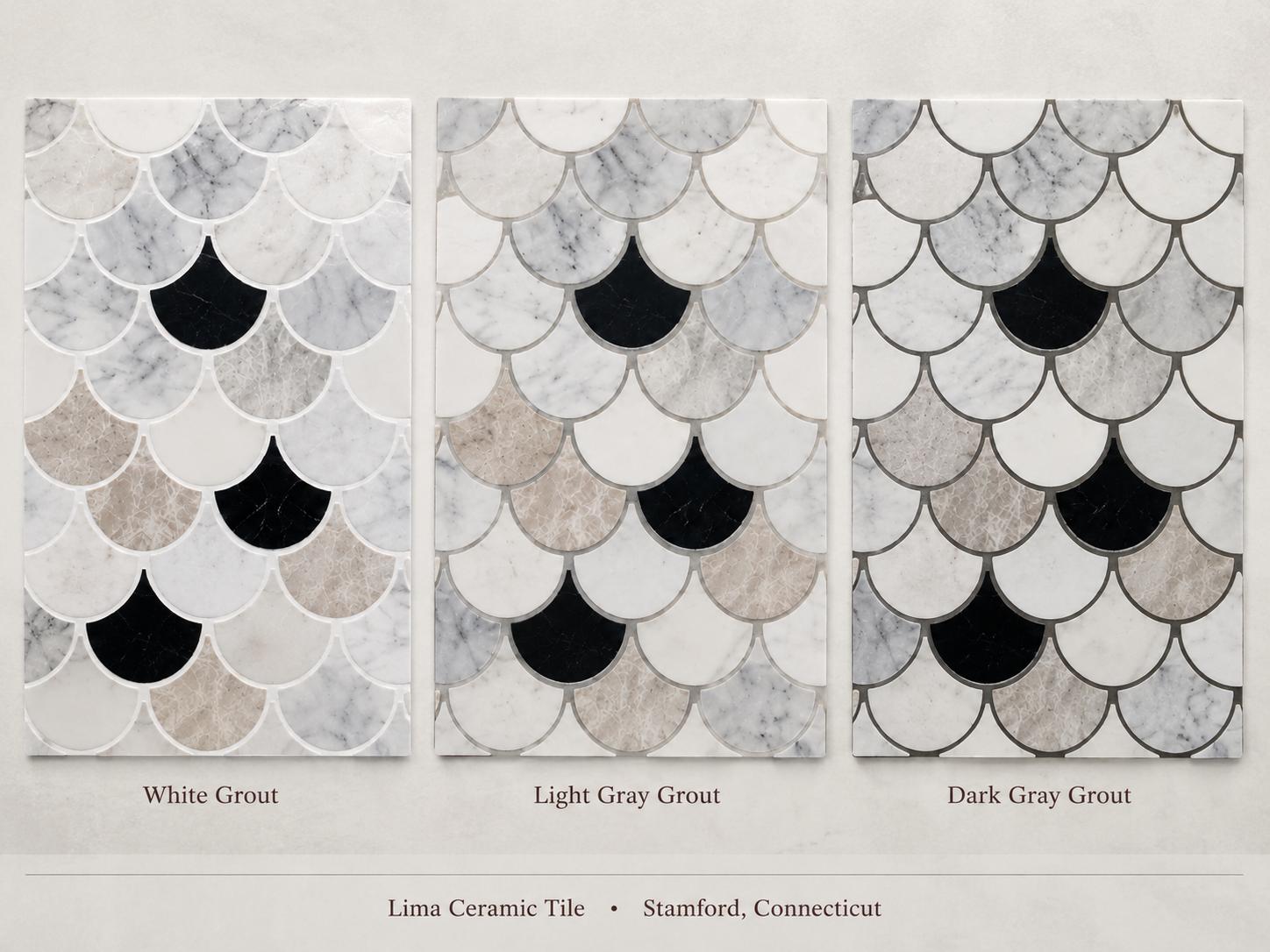
Grout has a major effect on scalloped tile because every curved edge becomes part of the pattern.
A grout color close to the tile creates a softer appearance. A contrasting grout makes every scallop much more noticeable.
For example:
- White tile + white grout: subtle and clean
- White tile + gray grout: stronger pattern
- Blue tile + matching grout: softer and more continuous
- Blue tile + lighter grout: more decorative contrast
Whenever possible, compare physical grout samples beside the actual tile before choosing.
Is Scalloped Tile Harder to Install?
Scalloped mosaics can require more planning than standard rectangular tile.
Many come attached to mesh sheets, but the installer still needs to carefully align the sheets so visible seams do not appear after grouting.
Extra planning may also be required around:
- Corners
- Shower niches
- Outlets
- Cabinets
- Trim
- Transitions into other tile
Before ordering, discuss the layout with your installer. The installer should determine where the pattern will start, where cuts will fall and how exposed edges will be finished.
What Should Connecticut Homeowners Know?
For indoor bathrooms and kitchens, Connecticut weather usually does not change whether scalloped tile is appropriate.
Exterior applications are different.
If scalloped or mosaic tile will be used outdoors, Connecticut’s freezing temperatures mean homeowners should verify that the exact product is approved for exterior and freeze-thaw conditions.
Check:
- Exterior-use approval
- Frost or freeze-thaw rating
- Slip resistance when needed
- Proper setting materials
- Drainage and substrate requirements
Do not assume every porcelain product is automatically suitable for outdoor Connecticut installations.
What to Check Before Buying Scalloped Tile
Before ordering, make sure you know:
- Whether the tile is porcelain, ceramic, glass or stone
- Whether it is approved for your application
- Whether it requires sealing
- Your preferred grout color
- How exposed edges will be finished
- How the pattern will meet corners and niches
- How much extra material your installer recommends
- The maintenance requirements of the exact product
The shape may be what first catches your attention, but the material and installation details determine how well the finished project performs.
Frequently Asked Questions
Is scalloped tile still in style in 2026?
Are scalloped tile and fish-scale tile the same?
Can scalloped tile be used in a shower?
Is fish-scale tile good for a kitchen backsplash?
Is porcelain or marble better?
What grout should I use with scalloped tile?
Is scalloped tile difficult to install?
Where can I buy scalloped tile in Stamford, CT?
See Scalloped Tile in Person
Photos are helpful, but color, texture and natural variation are much easier to judge in person.
At Lima Ceramic Tile in Stamford, CT, homeowners, contractors and designers can compare porcelain and marble scalloped tile, grout colors and other materials before making a final decision.
Bring countertop, cabinet, flooring or paint samples with you whenever possible so you can see how the entire project works together.